 Backseat Verse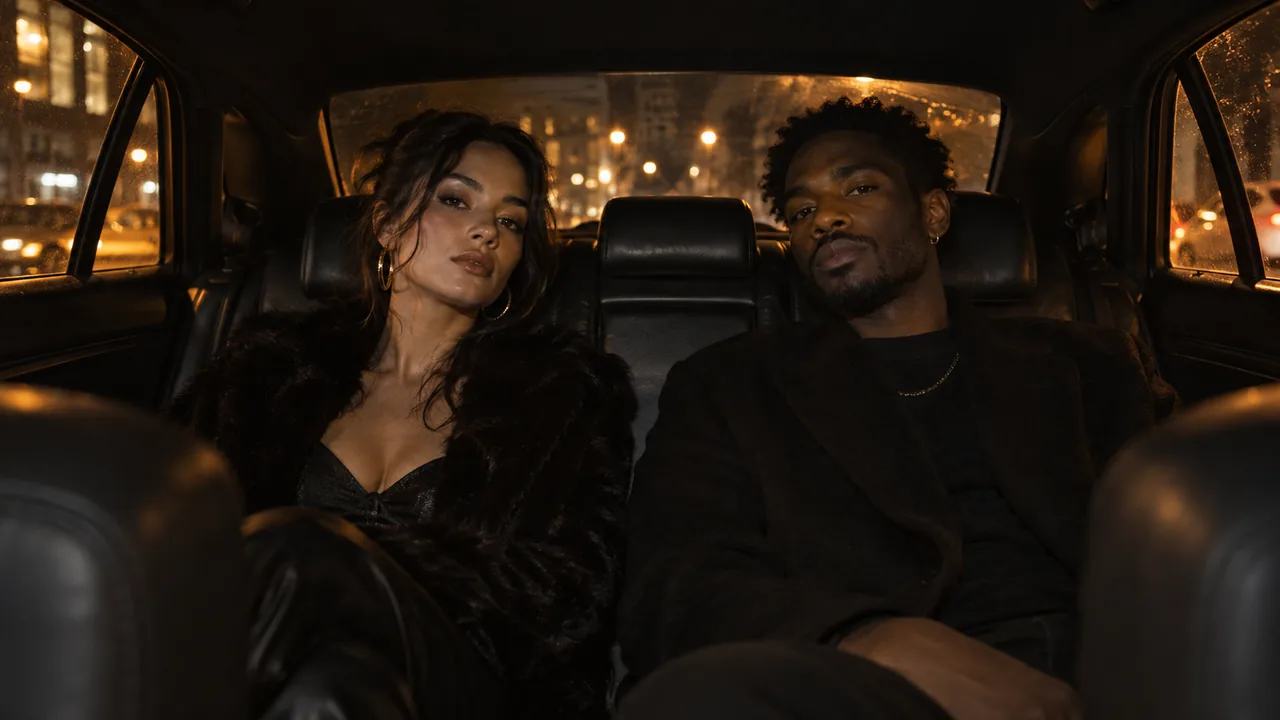
Choose a reference for this scene
Backseat Verse stages a pair beside each other in a car at night. Passing city light adds movement behind a comparatively restrained performance. The intended camera stays close enough to read both faces, with a handheld feeling that does not overwhelm the small interior.
Two individual identity references
Use two individual portraits with clear faces and comparable framing. Seated portraits can fit the visual idea, but an actual car is not required.
Visible neck and shoulders
Show enough upper body to describe where each person sits. A face-only crop removes useful separation between the two subjects.
An unobstructed lower face
Avoid phones, cups, hands or seat edges crossing the mouth and chin. These details are easy to miss in a small source preview.
Clear glass-free detail
Prefer a source taken without a reflective window between the camera and people. Glare and duplicate reflections can obscure the identity reference.
Photos to avoid
- A selfie in which one face is distorted by a very close wide-angle lens.
- A photo shot through tinted glass with heavy reflections.
- A reference with people overlapping so much that their shoulders merge.
From source portraits to a reviewed clip
Prepare two permitted portraits
Use one person in each of two separate portraits. Obtain permission from every identifiable person to appear in a synthetic video. Choose a JPG, PNG or WebP up to 4 MB for each portrait, and inspect facial detail before upload.
Check the local preview
Choose each required file in its own studio slot. Selection creates local previews; it does not submit the images to storage or the video provider. Replace or remove a portrait if its subject, crop or file is wrong.
Choose the frame
Use 9:16 or 3:4 for portrait video, 1:1 for a square post, or 16:9, 4:3 or 21:9 for a wider scene. Changing the aspect ratio does not change the credit cost for the same duration.
Choose your video length
This scene defaults to 10 seconds in 9:16. Your account stores credits; package cards show the video time they cover. A 15-second clip uses more credits than a 10-second clip. Unused credits stay in your balance, and you need enough for at least 10 seconds to start a new video.
Confirm permission, then generate
Use Generate only when the live service is available. The flow connects your account or guest session, uploads the required portraits in slot order and sends the scene request. Complete verification if it is required.
Recover the same task when uncertain
If the response is slow or unclear, use Check progress for the saved task instead of repeatedly starting new requests. Return with the same browser session when possible. An unknown response does not establish that the job failed.
Play the whole result
When the task completes, play the full video and inspect the scene-specific checks below. Save the result while its link is available. Starting another video uses additional video seconds.
What to check in the completed video
Watch changing light on each face
Check identity when the light shifts, not just in the brightest frame. A shadowed face can change during a close move.
Inspect where the bodies meet
Look at shoulders, arms and seat boundaries for merged anatomy or people drifting into each other.
Check reflections and windows
Look for duplicated faces in the glass, drifting window edges and unexpected background passengers.
When the result misses the intention
The pair merges at the shoulders
Choose two clean individual portraits with visible shoulders and relaxed arms. Avoid overlapping people or objects within either reference.
Window glare obscures a face
Start from a source without glass reflections. The generated window light is already a separate scene element.
Camera movement feels too intense
The scene is fixed rather than editable in this studio. For another intentional generation, use a calm, clear source pose and review whether the new output is suitable.
Questions before you start
Must both people be photographed in a car?
No. Use two clear individual portraits. Seated compositions can suit the idea, but the recipe requests the car environment rather than requiring a real car in the source.
Does choosing a file upload it immediately?
No. File selection creates a local preview. A live Generate request uploads the source to configured storage and sends its reference to the video service after permission confirmation.
Should I generate again if the request looks stuck?
Check the saved task first. A slow or uncertain response can still belong to an active job. Starting another video uses additional video seconds.
MAKE YOUR SCENE